
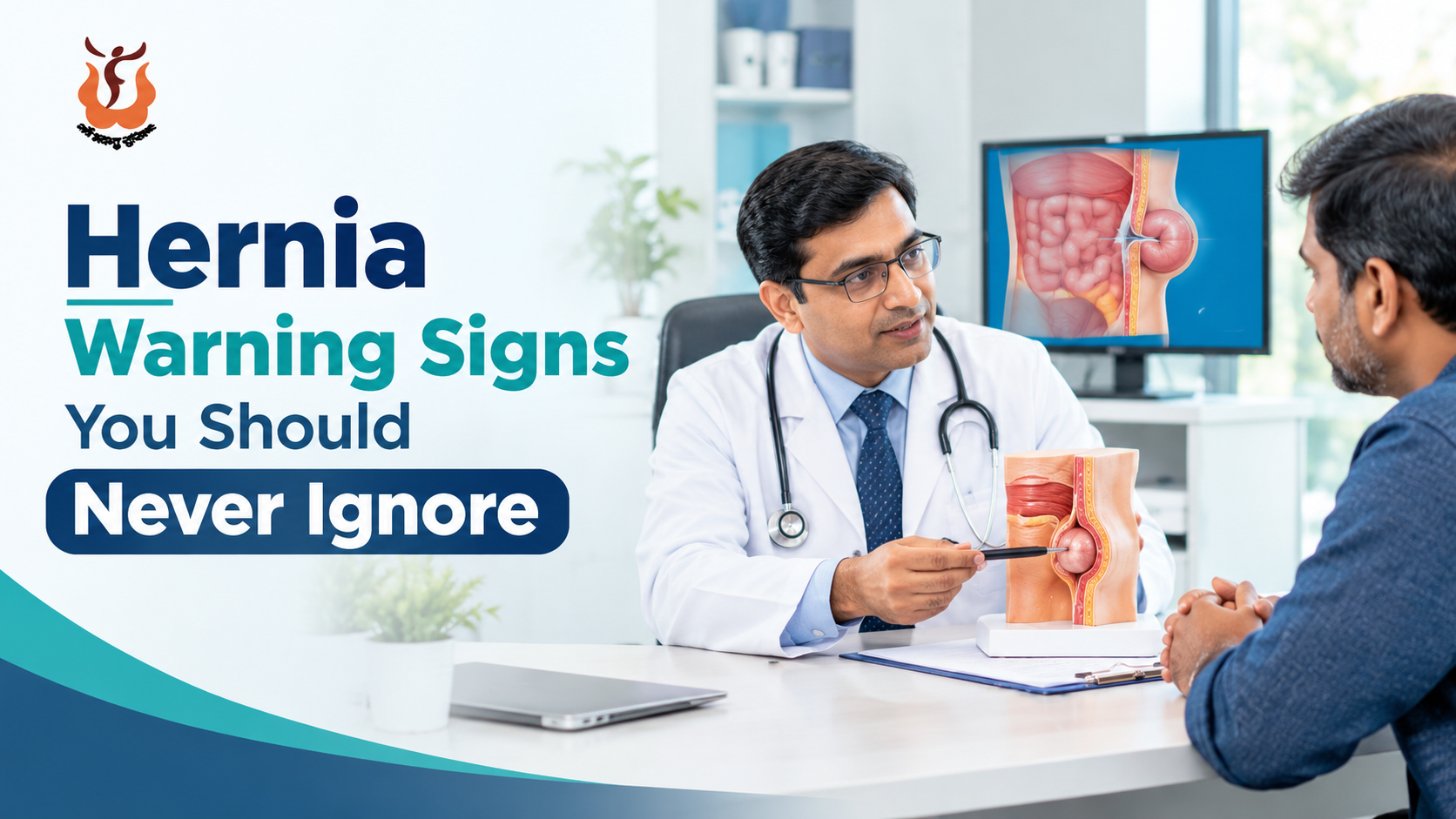
Hernia Warning Signs You Should Never Ignore
Hernia Warning Signs You Should Never Ignore are important to recognise because a hernia may begin with a small bulge or mild discomfort but can sometimes lead to serious complications. A hernia develops when an internal organ or tissue pushes through a weak area in the surrounding muscle or connective tissue. It commonly occurs in the abdomen or groin and may become more noticeable while coughing, lifting heavy objects, or standing.
Some hernias cause very few symptoms initially, which is why people may delay seeking medical advice. However, early diagnosis can help a doctor assess the condition and recommend suitable treatment. Understanding the symptoms and knowing when to seek urgent medical care can help prevent avoidable complications.
What Is a Hernia and Why Does It Occur?
A hernia occurs when tissue, such as a part of the intestine or abdominal fat, pushes through a weak spot in the muscle or connective tissue. It can develop due to muscle weakness, ageing, previous surgery, pregnancy, or increased pressure inside the abdomen.
Common types include inguinal hernia in the groin, umbilical hernia near the belly button, femoral hernia near the upper thigh, incisional hernia at a previous surgical site, and hiatal hernia, which occurs when part of the stomach moves through the diaphragm.
Heavy lifting, chronic coughing, constipation, and straining may contribute to symptoms or make an existing hernia more noticeable. However, a hernia does not always develop because of one specific activity.
Hernia Warning Signs You Should Never Ignore
Recognising changes in your body can help you seek treatment before complications develop. The symptoms may vary depending on the type, size, and location of the hernia.
1. A Visible Bulge in the Abdomen or Groin
A lump or bulge is one of the most common signs of a hernia. You may notice it near the belly button, in the groin, or around a previous surgical scar.
The bulge may become more visible when you stand, cough, bend, or strain. It may become less noticeable when you lie down, but this does not mean the hernia has healed.
Do not ignore a new or growing lump, even if it does not cause pain. Arrange a medical examination to identify the cause and determine whether treatment is needed.
2. Pain or Discomfort While Lifting Objects
Some people experience discomfort in the abdomen or groin while lifting heavy objects, exercising, coughing, or bending. The pain may feel like pressure, pulling, heaviness, or a dull ache.
Although such discomfort can have several causes, it may indicate a hernia, especially when accompanied by a visible bulge. Avoid activities that trigger pain and consult a doctor for an assessment.
Severe or sudden pain should not be dismissed as ordinary muscle strain.
3. A Feeling of Pressure or Heaviness
A hernia may cause a sensation of heaviness, pressure, or weakness in the affected area. People with a groin hernia may notice discomfort that increases after standing for long periods or performing physical activities.
These symptoms can develop gradually, making them easy to overlook. If the feeling persists, becomes more frequent, or interferes with daily activities, seek medical advice.
4. Swelling That Becomes Larger Over Time
A hernia may gradually increase in size. You might notice that the bulge becomes more prominent when coughing or standing and less noticeable when resting.
An enlarging hernia may cause greater discomfort and can become more difficult to manage. Do not try to force a painful or firm bulge back into the abdomen.
A doctor can assess its size, location, and whether it can be safely reduced. Treatment decisions depend on the type of hernia, symptoms, and overall health.
5. Digestive Problems Along With a Hernia
Some abdominal hernias can cause complications involving the intestine. Symptoms may include abdominal discomfort, bloating, nausea, vomiting, or difficulty passing stool or gas.
These symptoms require particular attention when they occur with a painful or firm hernia bulge. They may indicate an intestinal obstruction, which needs urgent medical evaluation.
Do not rely on home remedies or laxatives to manage these symptoms without medical advice.
Emergency Hernia Symptoms That Need Immediate Medical Attention
A hernia can sometimes become trapped, a condition known as incarceration. In some cases, the blood supply to the trapped tissue becomes restricted, causing strangulation. This is a medical emergency that may damage the affected tissue if treatment is delayed.
Seek emergency medical care if you experience any of the following:
Sudden or severe pain in the abdomen or groin.
A bulge that becomes firm, very tender, or cannot be pushed back in.
Red, purple, or dark discolouration over the bulge.
Nausea or repeated vomiting along with hernia pain.
Abdominal swelling with an inability to pass stool or gas.
Fever accompanied by a painful hernia or worsening abdominal symptoms.
Do not wait for all these symptoms to appear. A suspected strangulated hernia requires immediate assessment, and emergency surgery may be necessary.
How Is a Hernia Diagnosed?
A doctor usually begins with a medical history and physical examination. You may be asked to stand, cough, or strain gently so the doctor can check for a bulge.
If the diagnosis is unclear, an ultrasound or another imaging test may be recommended. The choice of investigation depends on the location of the suspected hernia and the symptoms.
Early assessment is useful even when the pain is mild. Not every abdominal lump is a hernia, so professional examination is important to establish the correct diagnosis.
What Are the Treatment Options for a Hernia?
Treatment depends on the type of hernia, its size, symptoms, risk of complications, and the patient’s overall health.
Some people with certain small, minimally symptomatic hernias may be advised to undergo regular medical monitoring. However, a hernia generally does not heal on its own, and observation is not appropriate for every case.
Surgery may be recommended when a hernia causes pain, grows larger, affects daily activities, or presents a significant risk of complications. Depending on the case, the surgeon may perform open surgery or minimally invasive surgery.
Patients can learn more about laparoscopic hernia surgery by consulting a qualified general or laparoscopic surgeon about the procedure, recovery, risks, and suitability for their condition.
Avoid self-treatment, tight binding, or using a hernia belt without medical advice. These measures do not repair the underlying weakness.
Can You Reduce the Risk of Hernia Problems?
Not every hernia can be prevented, but certain habits may help reduce strain on the abdominal wall and support recovery after treatment.
Maintain a healthy body weight.
Eat fibre-rich foods and drink adequate water to help prevent constipation.
Seek medical advice for a persistent cough.
Use proper lifting techniques and avoid lifting loads that cause pain.
Follow your surgeon’s instructions after abdominal surgery.
Avoid smoking and seek support to stop, particularly before planned surgery.
Consult a doctor if you notice a new bulge or persistent abdominal or groin discomfort.
If you already have a hernia, ask your doctor which activities are safe for you rather than following a general exercise or lifting routine.
Conclusion
Hernias may initially cause only a small bulge, mild discomfort, or a feeling of heaviness. However, increasing swelling, persistent pain, digestive symptoms, or a sudden change in the bulge should never be ignored.
Recognising Hernia Warning Signs You Should Never Ignore can help you seek timely medical advice and understand the available treatment options. Severe pain, vomiting, skin discolouration, or a trapped bulge may indicate a medical emergency.
If you suspect a hernia, consult a qualified surgeon for proper evaluation. Early assessment and an appropriate treatment plan can help reduce the risk of serious complications and support a safer recovery.