
How ROP Can Affect Vision in Premature Babies
Premature babies need special medical care because some organs may not be fully developed at birth. One condition that can affect their eyes is How ROP Can Affect Vision in Premature Babies.
ROP, or Retinopathy of Prematurity, is an eye condition that mainly affects babies born too early or with very low birth weight. It develops because the blood vessels in the retina, the light-sensitive layer at the back of the eye, may not have completed their normal development. If ROP is detected early, timely monitoring and treatment can help protect the baby’s vision. ANAND HOSPITAL
What Is Retinopathy of Prematurity?
Retinopathy of Prematurity is a condition in which abnormal blood vessels develop in the retina of a premature baby. Normally, retinal blood vessels develop gradually during pregnancy and reach maturity near the end of pregnancy. When a baby is born prematurely, this development can be interrupted.
The condition may remain mild and resolve naturally, but some babies can develop more serious changes. This is why regular eye examinations are important for babies who are at risk.
Understanding How ROP Can Affect Vision in Premature Babies helps parents recognise why eye screening should not be missed.
How ROP Can Affect Vision in Premature Babies
ROP can affect vision in different ways depending on its severity. In mild cases, the abnormal blood vessels may stop growing and the retina may continue developing normally. However, severe ROP can cause abnormal blood vessel growth, bleeding, scarring or retinal detachment.
Retinal detachment is particularly serious because the retina is responsible for sending visual signals to the brain. If the retina becomes detached and treatment is delayed, permanent vision loss may occur.
The World Health Organization recognises retinopathy of prematurity as a condition requiring long-term monitoring and care in affected children.
Which Premature Babies Are at Higher Risk?
Not every premature baby develops severe ROP. The risk may be higher in babies who are born at a very early gestational age or have a very low birth weight.
Other factors related to the baby’s medical condition and neonatal care may also influence the risk. Babies who require intensive neonatal treatment may need closer monitoring according to their doctor’s assessment.
Parents should not assume that a baby is safe from ROP simply because the baby appears healthy after discharge from the hospital.
Why ROP Eye Screening Is Important
One of the biggest concerns about ROP is that it may not produce obvious symptoms in the early stages. A baby cannot tell parents that vision is changing, and visible signs may not appear until the condition has become advanced.
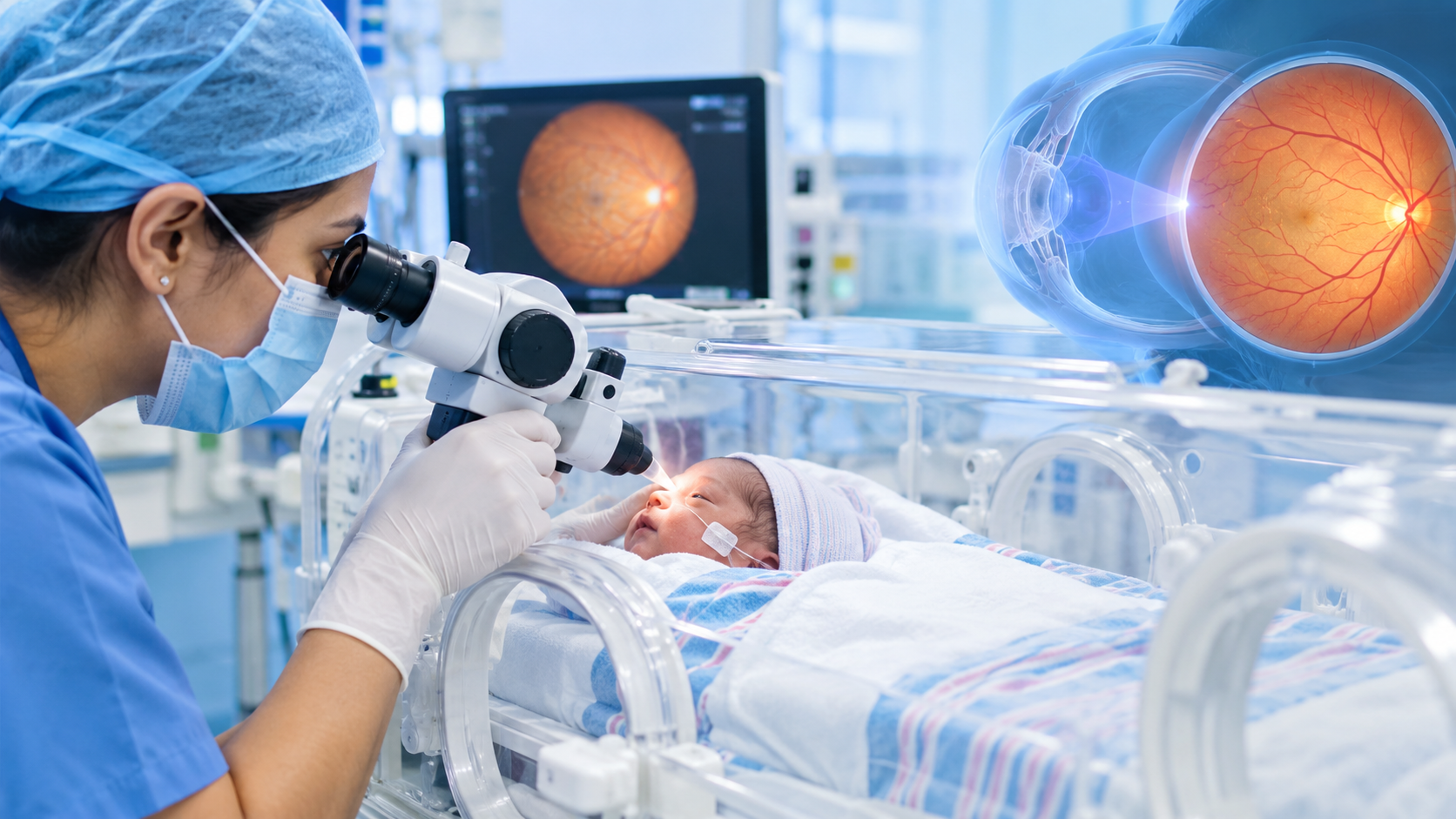
This makes scheduled retinal screening extremely important. Eye specialists examine the retina to determine whether the blood vessels are developing normally and whether any abnormal changes are present.
The timing of screening is important because there can be a limited period during which treatment can prevent serious vision damage.
ROP Treatment and Vision Protection
Treatment depends on the stage and severity of the condition. Some babies may only require regular eye examinations because the condition can improve as the retina develops.
When ROP becomes severe, an ophthalmologist may recommend treatment to stop abnormal blood vessel growth and reduce the risk of retinal damage. Depending on the individual case, treatment may include laser therapy or other specialised procedures.
Parents should understand that the treatment decision is based on the baby’s retinal examination, age, development and severity of ROP.
Long-Term Eye Care After ROP
Even after successful treatment or improvement, some children may need long-term eye care. Premature children may have a higher risk of refractive errors and other vision-related problems.
Regular follow-up can help identify issues such as difficulty focusing, squinting or reduced vision at an early stage. If spectacles or other treatment are recommended, following the eye specialist’s advice is important for healthy visual development.
What Parents Should Remember
Parents of premature babies should keep all scheduled eye appointments and maintain records of retinal examinations. If the baby is advised to undergo another examination after discharge, the appointment should not be delayed without speaking to the treating doctor.
Understanding How ROP Can Affect Vision in Premature Babies can help parents take timely action rather than waiting for visible symptoms.
Early detection does not guarantee that every vision problem can be prevented, but timely screening and appropriate treatment can significantly reduce the risk of serious retinal complications.
Conclusion
ROP is an important eye condition in premature babies because the retina may still be developing at birth. While mild cases can sometimes resolve naturally, severe disease can cause retinal damage and permanent vision problems. Regular screening by a qualified eye specialist is therefore an important part of care for babies at risk. Parents should follow the recommended examination schedule and discuss any concerns about their baby’s vision with an ophthalmologist.