

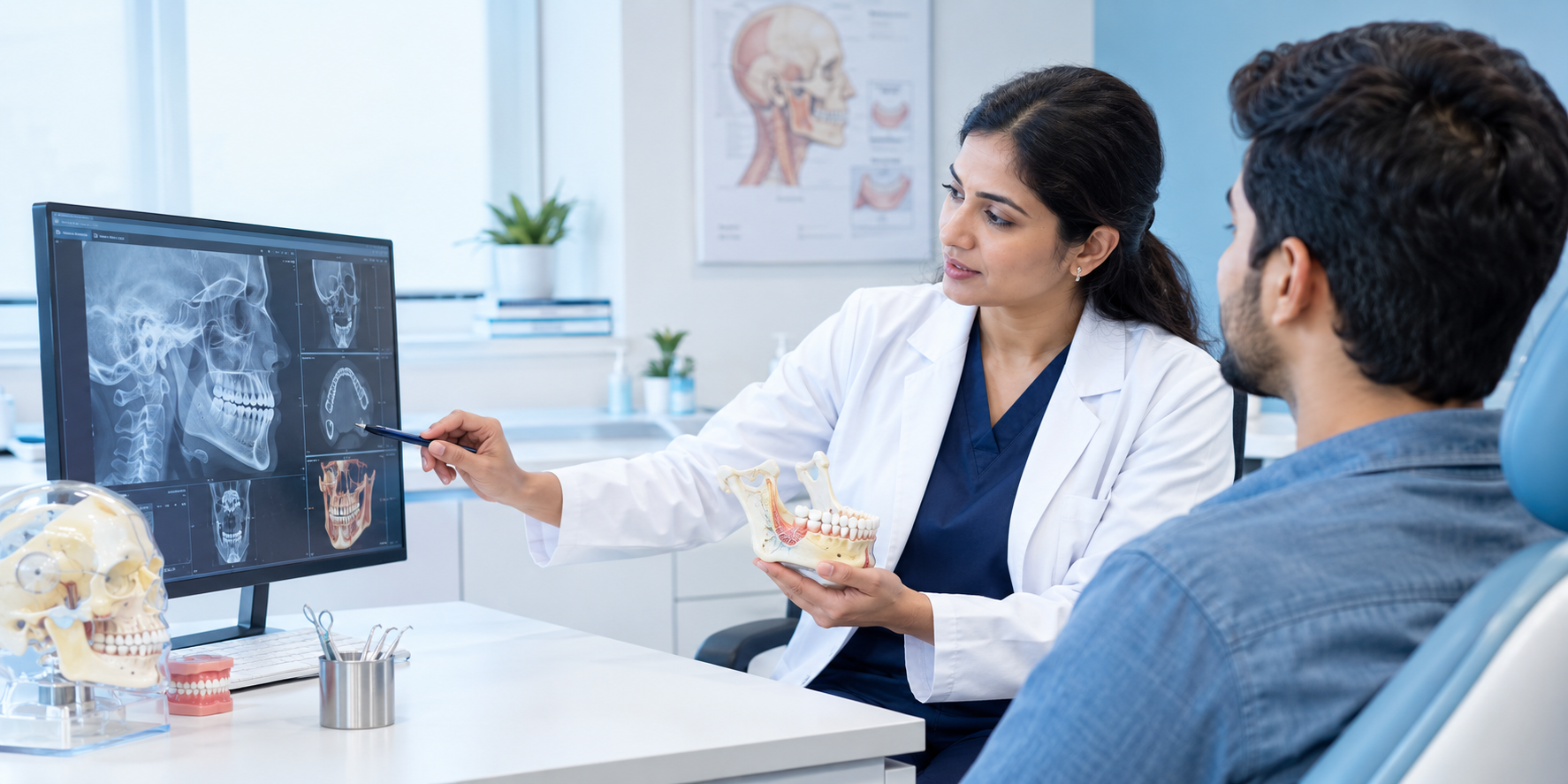
ORAL & MAXILLOFACIAL: Understanding Oral, Jaw and Facial Health
ORAL & MAXILLOFACIAL care focuses on the diagnosis, treatment and surgical management of conditions affecting the mouth, teeth, jaws, face, neck and related structures. While many people associate dental care mainly with teeth and gums, oral and maxillofacial treatment.
covers a much wider range of conditions, including jaw problems, facial injuries, impacted teeth, cysts, tumours and certain conditions requiring specialised surgery.
What Does Oral and Maxillofacial Treatment Include?
Oral and maxillofacial treatment covers several conditions involving the mouth, jaw and face. The treatment required depends on the patient’s symptoms, medical history and diagnosis.
Common areas of treatment may include:
- Impacted wisdom teeth
- Jaw fractures and facial injuries
- Cysts and tumours of the jaw
- Jaw joint problems
- Facial infections
- Corrective jaw surgery
- Oral and facial reconstruction
- Problems involving the salivary glands
- Congenital facial conditions
- Dental implant-related procedures
A detailed examination is usually performed before recommending any surgical or non-surgical treatment.
Oral and Maxillofacial Surgery for Jaw and Facial Problems
Oral and maxillofacial surgery is a specialised branch that deals with conditions requiring surgical management of the mouth, jaws and face. Surgery may be recommended when medicines or routine dental procedures are not sufficient.
One common procedure is the removal of impacted wisdom teeth. When a wisdom tooth does not have enough space to grow properly, it may cause pain, swelling, infection or damage to nearby teeth.
Jaw surgery may also be required in cases of severe facial trauma, abnormal jaw development or certain bite-related problems. Depending on the condition, treatment can improve both function and facial balance.
Common Conditions Treated by an Oral and Maxillofacial Specialist
An oral and maxillofacial specialist manages a wide range of conditions. Some may develop gradually, while others can occur suddenly due to an accident or injury.
Impacted Wisdom Teeth
Wisdom teeth may become trapped under the gum or grow at an unusual angle. This can result in pain, swelling, infection and difficulty opening the mouth. A specialist can assess the position of the tooth using dental imaging and recommend suitable treatment.
Jaw and Facial Fractures
Accidents, falls and sports injuries can cause fractures of the jaw or facial bones. Prompt evaluation is important because untreated fractures may affect chewing, speech, facial appearance and normal jaw movement.
Oral Cysts and Tumours
Some cysts and growths can develop inside the jaw or surrounding tissues. Not every growth is cancerous, but any unusual swelling, persistent ulcer or unexplained lump should be evaluated by a qualified professional.
Temporomandibular Joint Problems
The temporomandibular joint connects the jaw to the skull. Problems affecting this joint can cause jaw pain, clicking sounds, stiffness, headaches or difficulty opening and closing the mouth.
Reconstructive and Corrective Facial Surgery
The temporomandibular joint connects the jaw to the skull. Problems affecting this joint can cause jaw pain, clicking sounds, stiffness, headaches or difficulty opening and closing the mouth.
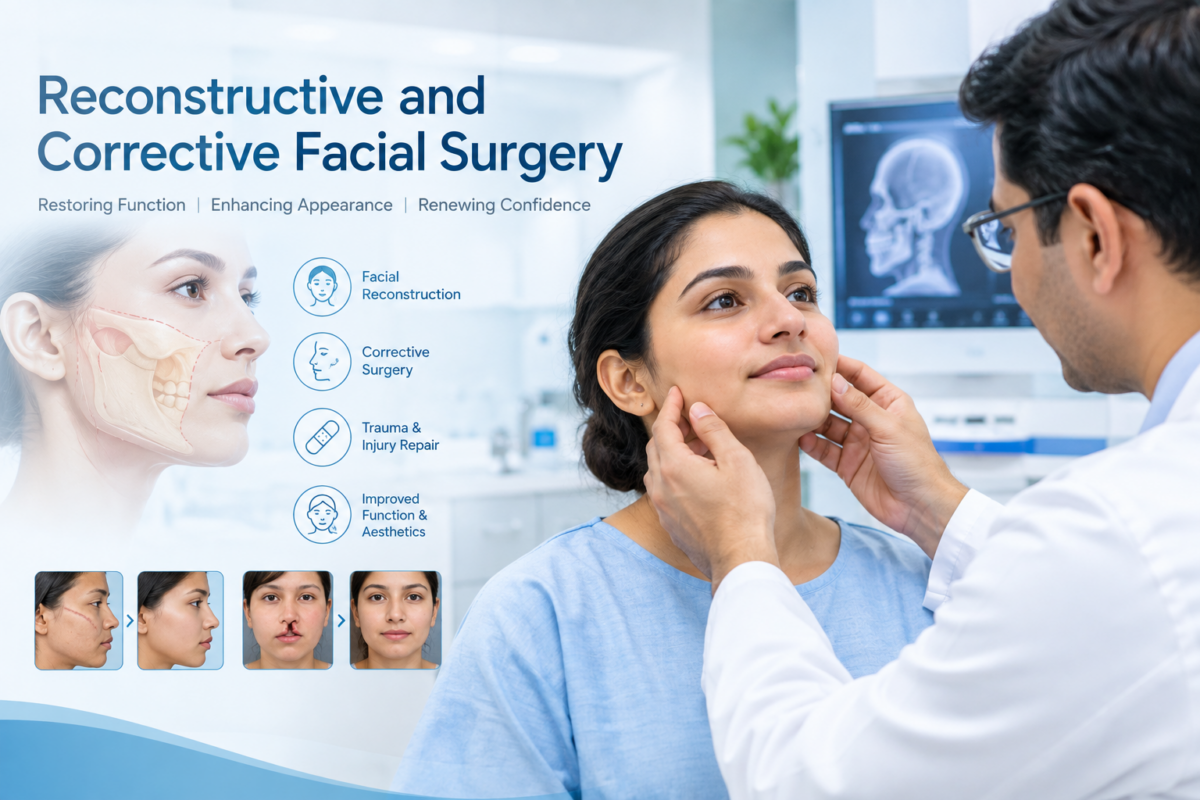
Reconstructive and Corrective Facial Surgery
Maxillofacial surgery may also involve reconstruction after trauma, disease or congenital conditions. Reconstructive procedures aim to restore facial structure and function as much as possible.
Corrective jaw procedures may be considered when the upper and lower jaws do not develop or align properly. Such problems can affect chewing, speaking and overall facial balance. Treatment planning generally involves clinical examination and imaging to understand the position of the facial bones.
In selected cases, reconstruction may also be required after removal of certain growths or tumours. The treatment plan is individualised according to the patient’s condition.
When Should You Consult a Maxillofacial Specialist?
Certain symptoms should not be ignored, particularly when they continue for several days or become worse. You should consider professional evaluation if you experience:
- Persistent jaw or facial pain
- Swelling around the jaw or face
- Difficulty opening the mouth
- Repeated dental or facial infections
- Unexplained lumps inside the mouth
- Persistent oral ulcers
- Problems following a facial injury
- Difficulty chewing or swallowing
- Pain associated with an impacted wisdom tooth
Early consultation can help identify the underlying cause and determine whether medication, dental treatment, observation or surgery is appropriate.
Why Choose Specialised Oral and Facial Care?
The mouth, jaws and facial structures are closely connected. A problem in one area can sometimes affect surrounding structures. Specialised ORAL & MAXILLOFACIAL care combines knowledge of dentistry, medicine and surgery to manage complex conditions involving these areas.
Diagnosis may involve a physical examination along with X-rays, CT scans or other imaging tests when required. The treatment approach depends on the patient’s age, overall health, severity of the condition and expected outcome.
If you are looking for an oral and maxillofacial surgeon for a specific jaw, facial or oral condition, a proper consultation can help you understand the available treatment options.